

BRADLEY HOME TEAM
Gresham Neighborhood Guide
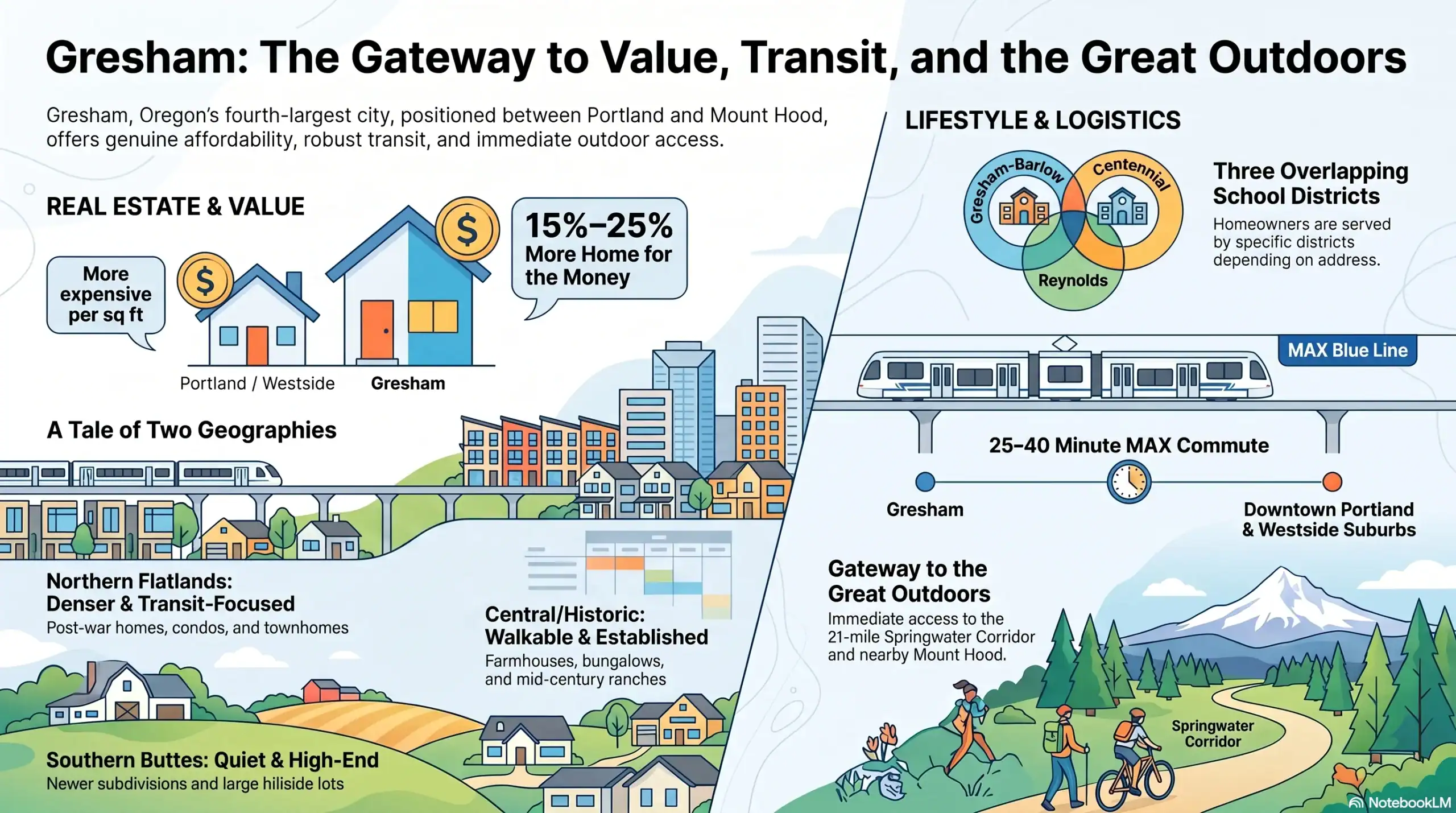
East of Portland, at the gateway to Mount Hood and the Columbia River Gorge, Gresham is one of the metro's most practical and accessible places to live — a full-service city that pairs genuine affordability with MAX light-rail access, a walkable historic downtown, and outdoor recreation right out the back door. Oregon's fourth-largest city, Gresham offers noticeably more home for the money than the westside suburbs, along with easy reach to the Gorge, the Sandy River, and Mount Hood.
Gresham sits about twelve to seventeen miles east of downtown Portland, connected by the MAX Blue Line and Interstate 84. It ranges from denser, transit-connected flatlands in the north to hillside neighborhoods climbing toward the buttes and foothills in the south and east — a geographic split that shapes both character and price across the city.
Homes in Gresham
Gresham is best understood as several markets within one city, with a price spread wider than almost anywhere in the metro. The northern flatlands, anchored by the MAX Blue Line, are denser, more transit-connected, and the most affordable — a practical entry point with post-war homes, condos, and townhomes. The southern and eastern reaches climb toward the buttes, trading urban convenience for larger lots, quieter streets, hillside views, and higher prices, including newer subdivisions in the Mount Hood and Pleasant Valley areas.
In between, established neighborhoods like Kelly Creek, Powell Valley, and Historic Southeast offer a mix of century-old farmhouses, mid-century ranches, and newer builds on medium-to-large lots. Downtown Gresham adds walkable bungalows and townhomes. Across all of it, Gresham's defining trait is value — measurably more square footage per dollar than comparable Portland or westside neighborhoods.
A buyer's note: Gresham is not a single market. Price and character shift sharply between the northern flatlands and the southern buttes, and neighborhood-level differences matter here more than in most cities. Research the specific neighborhood carefully before you commit.
What Makes Gresham Different: Value, Transit, and the Outdoors
Three things define daily life in Gresham and set it apart from the westside suburbs.
Genuine Affordability
Gresham runs well below the Portland metro average on price, offering roughly 15 to 25 percent more home per dollar than comparable neighborhoods across the Portland city line. For buyers priced out of Beaverton, Hillsboro, or the inner eastside who still want transit access to the core city, it's one of the metro's most accessible entry points.
MAX Light Rail and Downtown
The MAX Blue Line connects Gresham to downtown Portland and out to Hillsboro, with multiple stations across the city and a ride of roughly twenty-five to forty minutes into the core. Historic Downtown Gresham — walkable, meter-free, and anchored by Main City Park — offers turn-of-the-century architecture, local restaurants and shops, a farmers market, and a Center for the Arts.
The Gateway to Mount Hood
Gresham's greatest amenity is its position at the edge of the outdoors. The Springwater Corridor trail runs through the city; the buttes — Powell, Gabbert, and Hogan — offer hiking and Mount Hood views; and the Sandy River, the Columbia Gorge, Multnomah Falls, and Mount Hood itself are all a short drive east.
Schools
Gresham is unusual in being served by three school districts — Gresham-Barlow, Centennial, and Reynolds — depending on where in the city you live. All three rank among the most diverse districts in the state. Because the district itself changes by address, confirming the boundary is especially important here.
Elementary and Middle
Which elementary and middle schools serve a home depends on the district and neighborhood — Gresham-Barlow covers the majority of the city, with Centennial serving the far west and Reynolds the north. Verify the district and feeder pattern for any specific address.
High School
Depending on location, students attend high schools including Gresham, Sam Barlow, or Springwater Trail (Gresham-Barlow), Centennial (Centennial district), or Reynolds (Reynolds district).
A buyer's note: because Gresham spans three districts, the school question here is unusually address-dependent. Confirm which district and which schools serve a specific home before making an offer — don't assume from the city name.
Lifestyle
Gresham has a friendly, down-to-earth, and notably diverse character, with a multicultural population reflected in its restaurants, markets, and community events. Daily life balances suburban practicality — established neighborhoods, parks, Mt. Hood Community College, Legacy Mount Hood Medical Center, and shopping along the Burnside and Powell corridors — with genuine access to the outdoors.
The historic downtown anchors a growing arts and events scene, from the Center for the Arts to outdoor cinema and neighborhood gatherings, while the Gresham Farmers Market and community festivals bring residents together. It's a welcoming, community-focused city that trades postcard prestige for real value and easy access to Oregon's natural landmarks.
Getting Around
Gresham is well connected for an eastside city. The MAX Blue Line runs through Gresham with multiple stations, reaching downtown Portland in roughly twenty-five to forty minutes, and Interstate 84 offers a fast driving route west to Portland and the airport (about twenty minutes). Within the city, the Springwater Corridor and Gresham-Fairview Trail provide car-free routes, and Highway 26 heads southeast toward Mount Hood. Portland International Airport is a short drive north.
Parks and Recreation
Gresham's position at the edge of the outdoors gives it exceptional recreation, backed by hundreds of acres of city parks and natural areas.
Springwater Corridor Trail
A paved, largely car-free regional trail running through Gresham — part of a roughly 21-mile path connecting toward Portland and out to Boring, ideal for cycling and walking.
The Buttes — Powell, Gabbert, and Hogan
Extinct cinder-cone volcanoes turned nature preserves, offering forested hiking trails and stunning Mount Hood views right within and beside the city.
Main City Park
Gresham's downtown park, set directly on the Springwater trail, with a skate park, a Japanese garden, and open space at the heart of the historic district.
The Sandy River and Mount Hood
Just east, Oxbow Regional Park and the Sandy River offer boating, swimming, and forest trails, with the Columbia Gorge, Multnomah Falls, and Mount Hood all a short drive away.
People Also Ask
Is Gresham affordable compared to the rest of the metro?
Generally, yes — Gresham runs well below the Portland metro average, offering roughly 15 to 25 percent more home per dollar than comparable neighborhoods across the Portland line. It's one of the most accessible entry points in the region for buyers who still want MAX access to the core city. Prices vary widely by neighborhood, so ask for a recent snapshot.
Does Gresham have light rail to Portland?
Yes. The MAX Blue Line runs through Gresham with multiple stations, connecting to downtown Portland in roughly twenty-five to forty minutes and continuing west toward Hillsboro.
Which school district serves Gresham?
It depends on the address — Gresham is served by three districts: Gresham-Barlow (the majority of the city), Centennial (far west), and Reynolds (north). Always verify which district and schools serve a specific home.
Ready to explore Gresham?
With real value, MAX access, and the outdoors right out the back door, Gresham rewards buyers who understand its distinct neighborhoods and three school districts — and that's exactly where we come in.