

BRADLEY HOME TEAM
Oregon City Neighborhood Guide
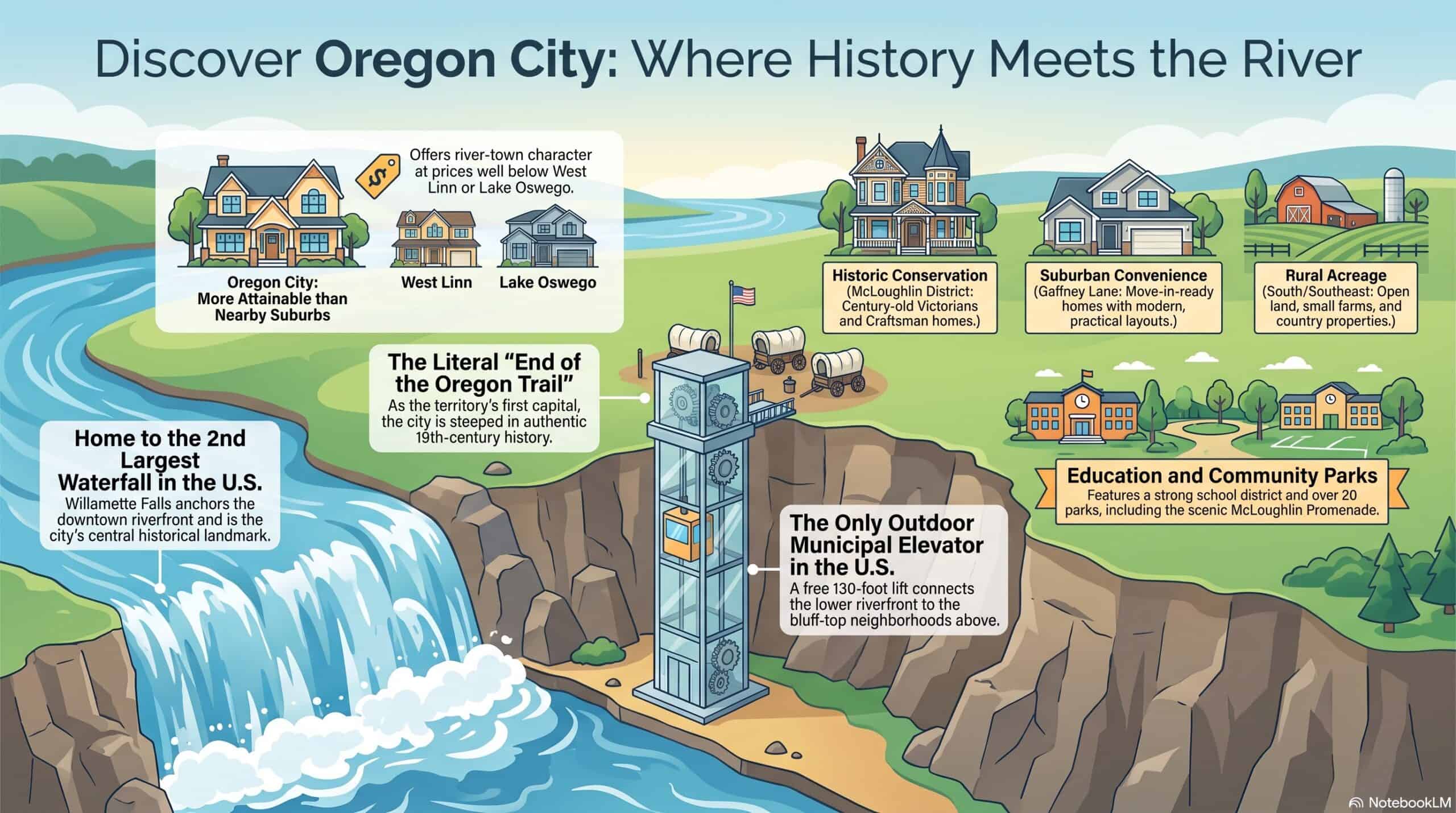
Perched on bluffs above the Willamette where the river drops over the thundering Willamette Falls, Oregon City wears its history openly. It was the first U.S. city incorporated west of the Rocky Mountains, the end of the Oregon Trail, and the original capital of the Oregon Territory — and that heritage still shapes the streets, the architecture, and the community's sense of itself. For buyers, it offers something increasingly rare in the metro: authentic historic character and river-town scenery at prices well below the closer-in suburbs.
The county seat of Clackamas County, Oregon City sits about thirteen miles south of Portland along Interstate 205. Willamette Falls — the second-largest waterfall by volume in the United States — anchors the downtown, and a one-of-a-kind municipal elevator connects the lower riverfront to the historic neighborhoods on the bluff above.
Homes in Oregon City
Oregon City is one of the more layered housing markets in the metro, spanning genuine historic homes, practical suburban subdivisions, and semi-rural acreage — often within the same city. The historic McLoughlin neighborhood on the bluff is a designated conservation district with hundreds of historically significant properties, where a 20-minute walk can pass a century of architecture: Queen Annes, Craftsman four-squares, bungalows, and mid-century ranches in a “checkerboard” of styles.
Beyond the historic core, suburban neighborhoods like Gaffney Lane and newer developments offer move-in-ready homes with modern layouts, while the broader area to the south and southeast opens into acreage and country properties for buyers wanting more land. That range — from restored Victorians to new construction to small farms — is Oregon City's defining real-estate trait, and it's a genuinely more attainable entry point than West Linn or Lake Oswego across the river.
A buyer's note: many Oregon City homes sit within the McLoughlin Conservation District, where exterior changes can be subject to historic review. If you're buying a historic home, understand the district's guidelines before planning any renovations.
What Makes Oregon City Different: Falls, History, and the Elevator
Few communities in Oregon carry this much living history, and it translates into a downtown and daily life you won't find elsewhere.
Willamette Falls and the Riverwalk
The horseshoe of Willamette Falls — sometimes called Oregon's Niagara — dominates the downtown riverfront and is the reason the city exists. The ongoing Willamette Falls Legacy Project is transforming the former industrial mill site into a public riverwalk, steadily opening this landmark back up to residents and visitors.
The Municipal Elevator
Oregon City has the only outdoor municipal elevator in the United States — a 130-foot lift, free to ride, that connects the lower downtown to the McLoughlin neighborhood on the bluff. Its observation deck offers sweeping views of the river and falls, and it remains a practical daily link between the two levels of the city.
End of the Oregon Trail
As the literal end of the Oregon Trail and the territory's first capital, Oregon City is steeped in landmarks: the John McLoughlin House, the End of the Oregon Trail Interpretive Center, the Museum of the Oregon Territory, and a downtown of some of the state's oldest buildings, now filled with local restaurants, galleries, and shops.
Schools
Oregon City is served by the Oregon City School District, regarded as among the stronger districts in the region. School assignment depends on where in this geographically large city you buy, so confirm the boundary for any specific address.
Elementary and Middle
A range of neighborhood elementary schools — including John McLoughlin, Gaffney Lane, and King, among others — serve different parts of the city, feeding into the district's middle schools. Because Oregon City covers a lot of ground, verify the feeder pattern for a given home.
High School
Students attend Oregon City High School, which tests well statewide and offers dual-enrollment courses through nearby Clackamas Community College.
A buyer's note: Oregon City is large and its neighborhoods spread across bluff, suburb, and near-rural areas. Confirm the exact school assignment for any address rather than assuming from the neighborhood name.
Lifestyle
Oregon City blends small-town warmth with genuine historic texture. Downtown — the McLoughlin district — mixes boutiques, art galleries, record stores, bookshops, breweries, and restaurants among landmark buildings, and the year-round Oregon City Farmers Market at Clackamas Community College is a Saturday-morning institution drawing local farms, bakers, and makers.
The city's character appeals to history buffs, outdoor lovers, and buyers who prize authenticity over cookie-cutter development — while still offering everyday conveniences and quick access to Clackamas-area shopping. It's a place where the past is visible on every block, yet daily life is thoroughly practical.
Getting Around
Interstate 205 runs along the city's edge, connecting quickly to the wider metro, the Clackamas Town Center area, and Portland roughly thirteen miles north. Highway 99E offers a riverfront route, and TriMet bus service links the city toward Portland and connections to MAX. Within town, the municipal elevator and the McLoughlin Promenade make the bluff neighborhoods walkable, and cycling is popular — though outside the historic core, much of the city is car-oriented.
Parks and Recreation
Oregon City pairs its dramatic river setting with a deep bench of parks and natural areas — more than twenty citywide.
McLoughlin Promenade
A landmark walkway and linear park along the top of the bluff, with sweeping views of downtown, the Willamette River, and Willamette Falls.
Canemah Bluff Nature Park
A scenic bluff-top natural area with hiking trails, wildflowers, and celebrated views over the Willamette — often ranked among the best hikes near Portland.
Clackamette Park
A large riverfront park at the confluence of the Clackamas and Willamette rivers, with a boat launch, RV camping, and open recreation space.
Newell Creek Canyon and Riverfront Parks
A forested nature park just south of downtown, plus a string of smaller waterfront parks along the rivers for paddling and picnicking.
People Also Ask
Is Oregon City affordable compared to West Linn or Lake Oswego?
Generally, yes. Oregon City has long offered more attainable home prices than West Linn or Lake Oswego just across the river, which makes it a popular option for buyers priced out of those communities while still wanting river-town character and quick Portland access. Current pricing shifts month to month — ask for a recent market snapshot.
What is the Oregon City Municipal Elevator?
It's the only outdoor municipal elevator in the United States — a free-to-ride, 130-foot lift connecting downtown Oregon City to the historic McLoughlin neighborhood on the bluff above, with an observation deck overlooking the Willamette River and falls.
What is Oregon City known for?
It's known as the end of the Oregon Trail and the first incorporated U.S. city west of the Rockies, for Willamette Falls (the second-largest waterfall by volume in the country), the historic McLoughlin conservation district, and the one-of-a-kind municipal elevator.